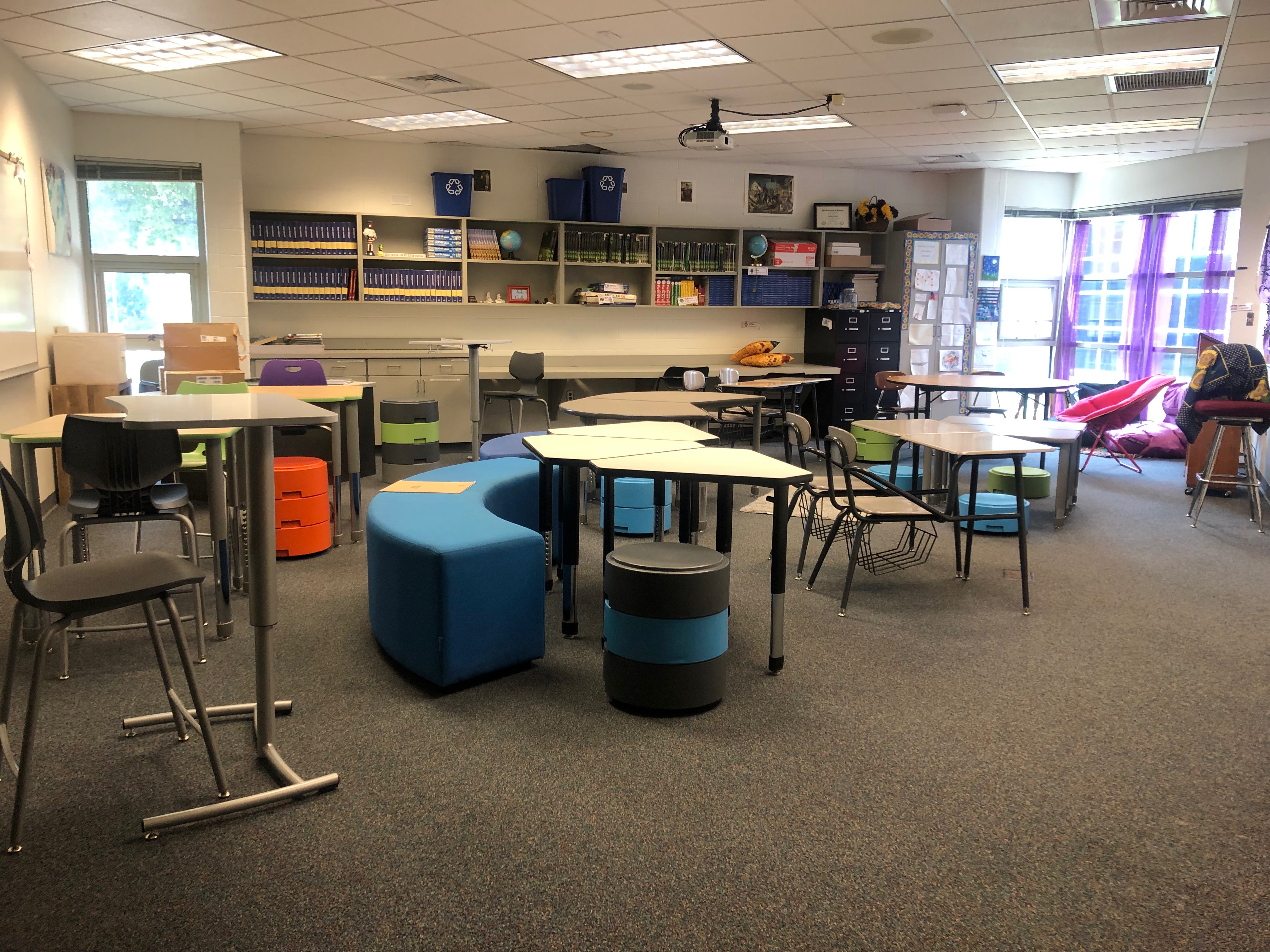
This year my district opened a second middle school building! While I am staying at our original building, it’s all very exciting to see the new things that the new building has this year. One that I’m rather jealous about is their new “flexible seating” options for their regular classrooms. I’m hoping we’ll get that update next year!
Flexible seating can refer to either the option for students to choose where they sit in a classroom, multiple types of seating in a classroom (tables and chairs, bench seats, short tables with floor seats, regular desks, etc.) or a combination of the two. The flexible seating I first referred to is the multiple types of seating. The teachers will then have the option to make seating charts or leave the choice of where to sit up to their students. Studies have shown that the benefits of flexible seating can range from improved posture and increased metabolism, to better engagement and focus as well as oxygen flow to the brain (Delzer, 2016).
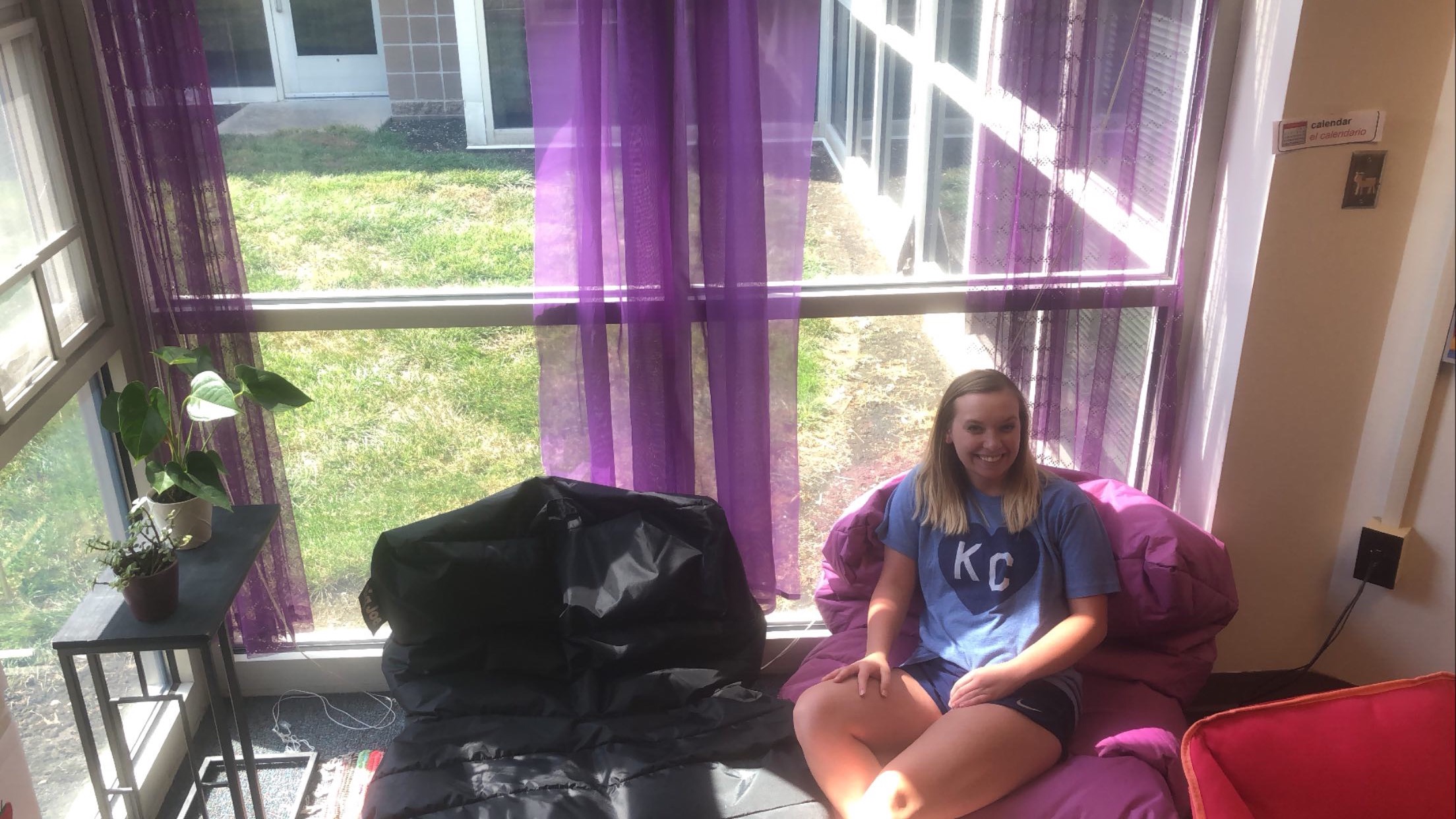
Last year, one teacher at our middle school had flexible seating because she had written a grant to request it. This year, she is the librarian at our new middle school, so my friend Noel Miller, 7th grade social studies teacher is using her flexible seating options. I asked her to tell me a little bit about why she personally chose flexible seating and how she plans to manage her classroom this year.
Why did you choose flexible seating for your classroom? Was this personal preference or do you think more teachers should embrace flexible seating?
Personal preference – it works for how I structure my classroom. Manyy of my lessons are PBL or model UDL and stations. In a history classroom it’s a great opportunity for kids to be reading a primary source at one station, watching a secondary source (or primary, if possible), discuss an event with peers, take notes from me – all within the span of one classroom. With kids moving around so much, working with different materials and people, flexible seating is ideal for me. I think if it’s something that can work for your classroom, you should give it a try!
Do you plan to use a seating chart?
I will be using a seating chart – preferably placing students by level. I want to group lower and higher students together so that they can build off of each other. This does not always work with behavior management, which is what I refer to first. A student that distracts will be moved. Some of my classes are able to “test out” of assigned seats with good behavior. I will still assign groups/partners within free seating to prevent the same students always working together/somebody feeling left out.
As we discussed her flexible seating, we also talked about how it presents opportunity for those 21st Century skills to be built again. The way she plans to group her students will allow for awesome collaboration and conversation between peers. Here’s to hoping we will all have flexible seating options next year! I’m excited to give it a try in my classroom as soon as possible!
Reference: Delzer, K. (2016). Flexible seating and student centered redesign. Retrieved from https://www.edutopia.org/blog/flexible-seating-student-centered-classroom-kayla-delzer

